Best Hosting for Next.js Sites in 2026: What the Comparisons Don't Tell You

Gordhan Das
Founder & CEO

Pricing Verification: Verified against official documentation and current provider pricing as of July 2026. Prices and platform capabilities change — confirm current details before committing.
Most "best hosting for Next.js" comparisons tell you the same three things: Vercel has the best developer experience because they built Next.js, Netlify is simplest for static sites, and Cloudflare Pages has the most generous free tier. All true. None of it tells you what actually happens the first time you deploy a real Next.js app to something other than Vercel and hit a feature that quietly does not work.
This is that missing piece, based on actually running Next.js on Cloudflare Pages in production.
1. The Three Real Options, Honestly Ranked by Use Case
Vercel — The Default, For a Real Reason
Most ProjectsVercel is built by the Next.js team, and it shows. Every Next.js feature works from day one — App Router, Server Actions, Incremental Static Regeneration, Edge Middleware, Image Optimization — with zero configuration required.
Pricing: Hobby plan is free for personal, non-commercial projects — 100GB bandwidth per month, unlimited deployments, 6,000 build minutes per month. Commercial use requires the Pro plan at $20 per user per month with 1TB bandwidth.
Real limitation: Cost scales with usage in a way that can surprise you. A single traffic spike can turn a comfortable free-tier project into an unexpected bill, and Pro's per-seat pricing adds up fast for a growing team.
Cloudflare Pages — Cheapest at Scale, But Read This First
Best for Static Next.jsCloudflare Pages offers an unusually generous free tier — unlimited sites, unlimited bandwidth, 500 builds per month — and the fastest global edge delivery of the three, backed by 300+ points of presence worldwide.
Pricing: Free tier genuinely covers most personal and small commercial projects indefinitely. At meaningful scale (roughly 1TB per month bandwidth), Cloudflare remains free while Vercel and Netlify both start costing real money.
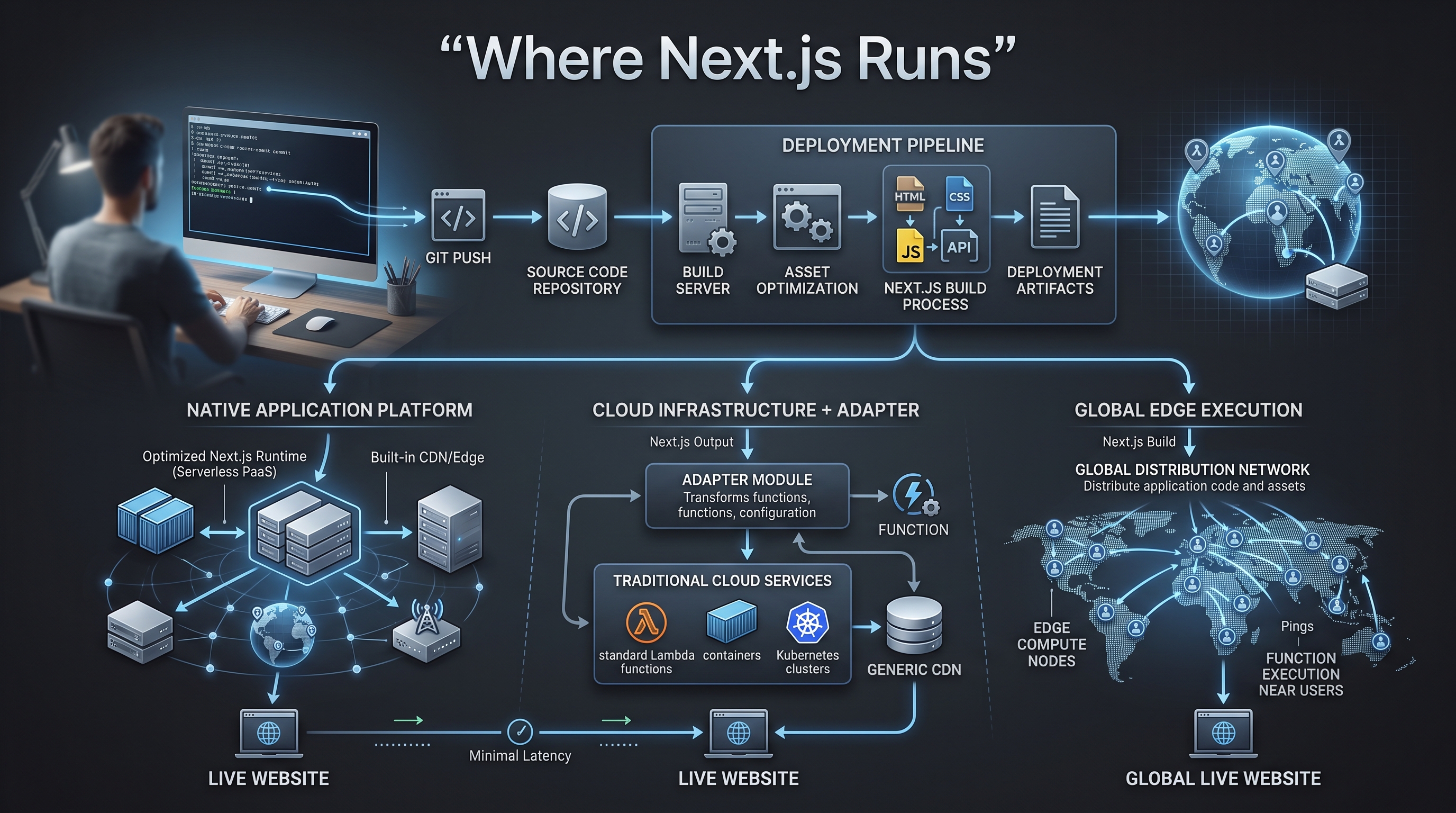
What actually happens when you deploy Next.js here: the @cloudflare/next-on-pages adapter works, and for most content-driven sites — static pages, blog posts, category pages with generateStaticParams — it is genuinely solid. But support is partial, not complete. Server Components, certain ISR configurations, and some middleware behaviors have real, documented limitations. This is a known, current gap, and you will only discover exactly which features are affected once you try to use them.
In practice on Unovix: dynamic routes and static generation — sitemap, robots, category pages — work reliably. The adapter layer is an extra configuration step compared to Vercel's zero-config deploy. Not difficult, but it is a real step worth budgeting time for if you are moving a Vercel-built Next.js project onto Cloudflare Pages for the first time.
Netlify — Reliable, With the Same Kind of Honesty
Ecosystem TeamsNetlify pioneered much of what "modern frontend hosting" means — build hooks, preview deployments, and Git-based workflows existed here before Vercel or Cloudflare adopted them.
Pricing: Free Starter tier with 100GB bandwidth and 300 build minutes per month. Pro at roughly $19 per user per month with 1TB bandwidth.
Real limitation for Next.js: Netlify's Next.js support runs through an adapter plugin rather than native first-party support — similar in spirit to Cloudflare's situation. Solid for standard use cases, but not the zero-configuration experience Vercel offers by virtue of building the framework itself.
2. Quick Comparison
| Platform | Free Tier Bandwidth | Next.js Support | Best For |
|---|---|---|---|
| Vercel | 100GB/month | Full, zero-config | Most projects, default choice |
| Cloudflare Pages | Unlimited | Partial (adapter-based) | Content-heavy, mostly-static sites |
| Netlify | 100GB/month | Adapter-based | Teams already on Netlify's workflow |
3. The Question That Actually Decides This
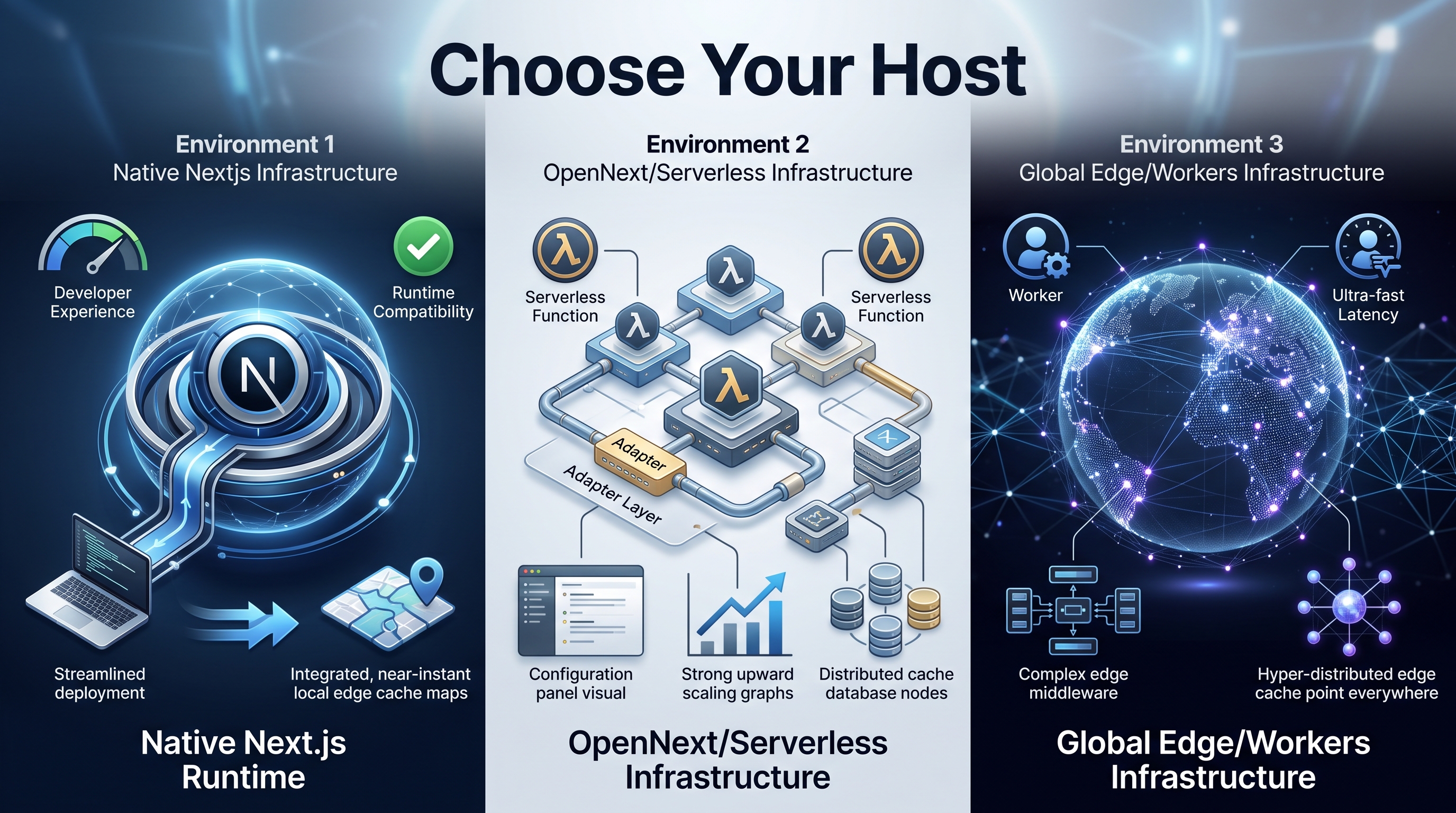
Skip the generic "which is best" framing and ask instead: does your site depend on Next.js's newest server-side rendering features, or is it mostly static content with some dynamic routes?
Blogs, marketing, documentation, affiliate and review sites: Cloudflare Pages is the strongest cost-to-performance choice, provided you test your specific routes against the adapter's current limitations before fully committing.
Server Components, complex ISR, advanced middleware: Vercel remains the safer choice. You will spend less time working around adapter gaps and more time building.
Already standardized on Netlify's workflow: staying put is reasonable. The adapter-based Next.js support is comparable to Cloudflare's situation, not meaningfully worse.

4. The Verdict
There is no universal winner here, and any comparison claiming otherwise is oversimplifying.
Vercel
The safest default because it is built by the people who build Next.js itself. You will spend the least time debugging platform-specific quirks.
Cloudflare Pages
The strongest choice specifically for cost-sensitive, mostly-static Next.js sites — provided you go in knowing the adapter has real, current gaps rather than discovering them mid-deployment. If you are building a content-driven site and comfortable testing your specific routes against the adapter's limitations before committing, the cost savings are real and durable.
Netlify
Sits in a similar position to Cloudflare for Next.js specifically, and makes the most sense if you are already invested in its broader ecosystem.
That is not a limitation announced quietly to sell you a hosting plan — it is the actual, current trade-off worth understanding before you commit to any of the three.
Unovix Editorial Transparency
This article was authored with strict technical and empirical integrity. Unovix never publishes sponsored articles, paid soft lobbies, or non-peer-reviewed tools reviews. We maintain deep operational servers to stress-test software performance parameters independently.